
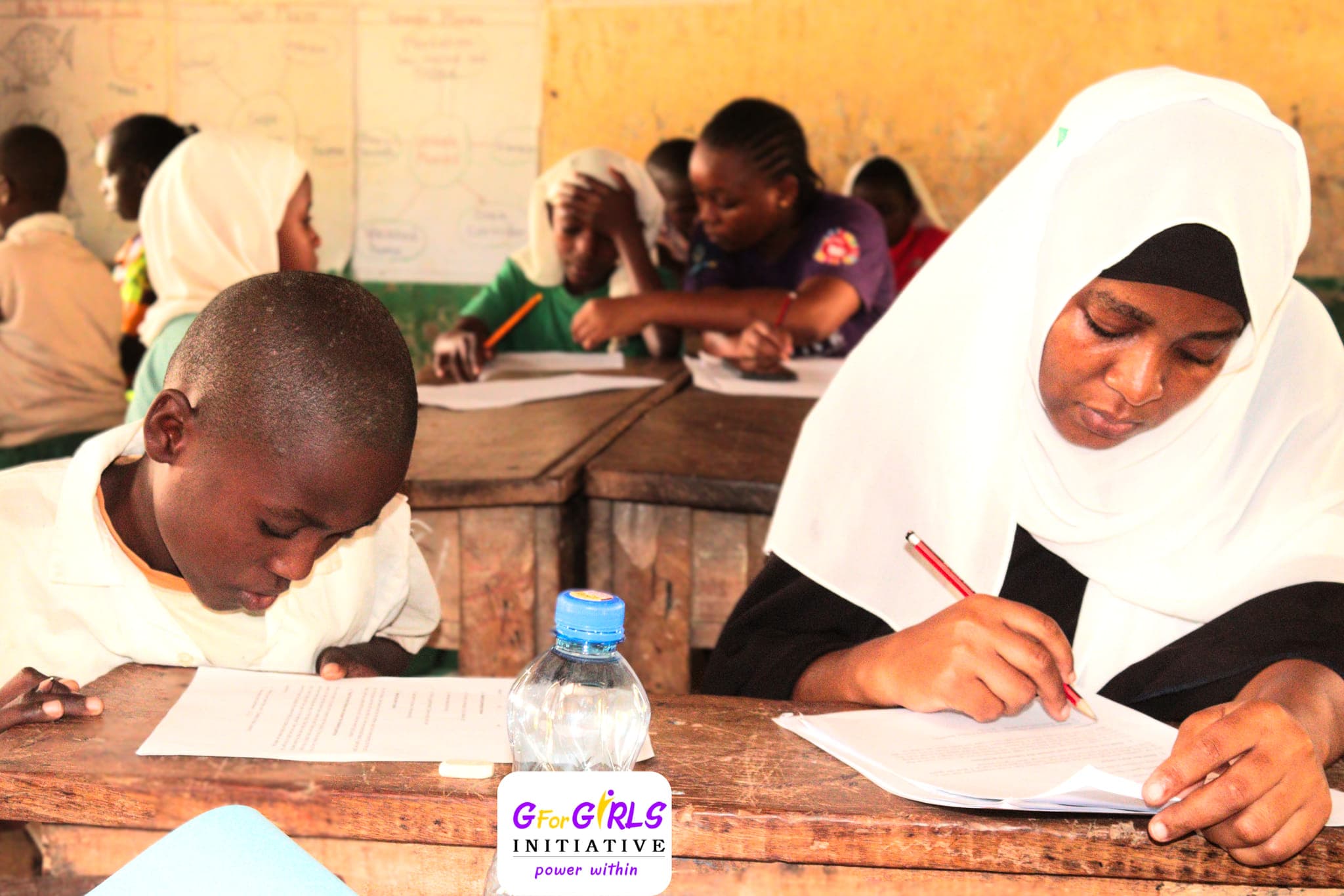
A child is considered literacy-poor if they cannot read and write after the foundational classes, Grade 1 to 3. In the five schools we work with in Vanga ward, over 80% of learners are still at beginner level. Literacy camps give Grade 4 learners the time and attention to catch up.
We partner with Nyansapo AI to assess every learner and place them at Beginner, Letter, Word, Paragraph or Story level, then build sessions around each group. Camps are facilitated by teachers and young volunteers from the community, all trained on our literacy implementation guide, gender mainstreaming, safeguarding and child protection before they work with children.
The guide covers phonics, phonemic awareness, vocabulary, fluency and comprehension, following the basics of reading and writing recommended by the Kenya Institute of Curriculum Development. Because GGI provides food during the camp, absenteeism drops. On an ordinary day, 10 to 20 learners would be missing from school.
- Who
- Grade 4 learners
- Length
- 1 hour a day for 25 days
- Assessment
- Midpoint and end of camp
- Result
- 75% average improvement